What abrash means
[PLACEHOLDER: bild abrash-evidence]
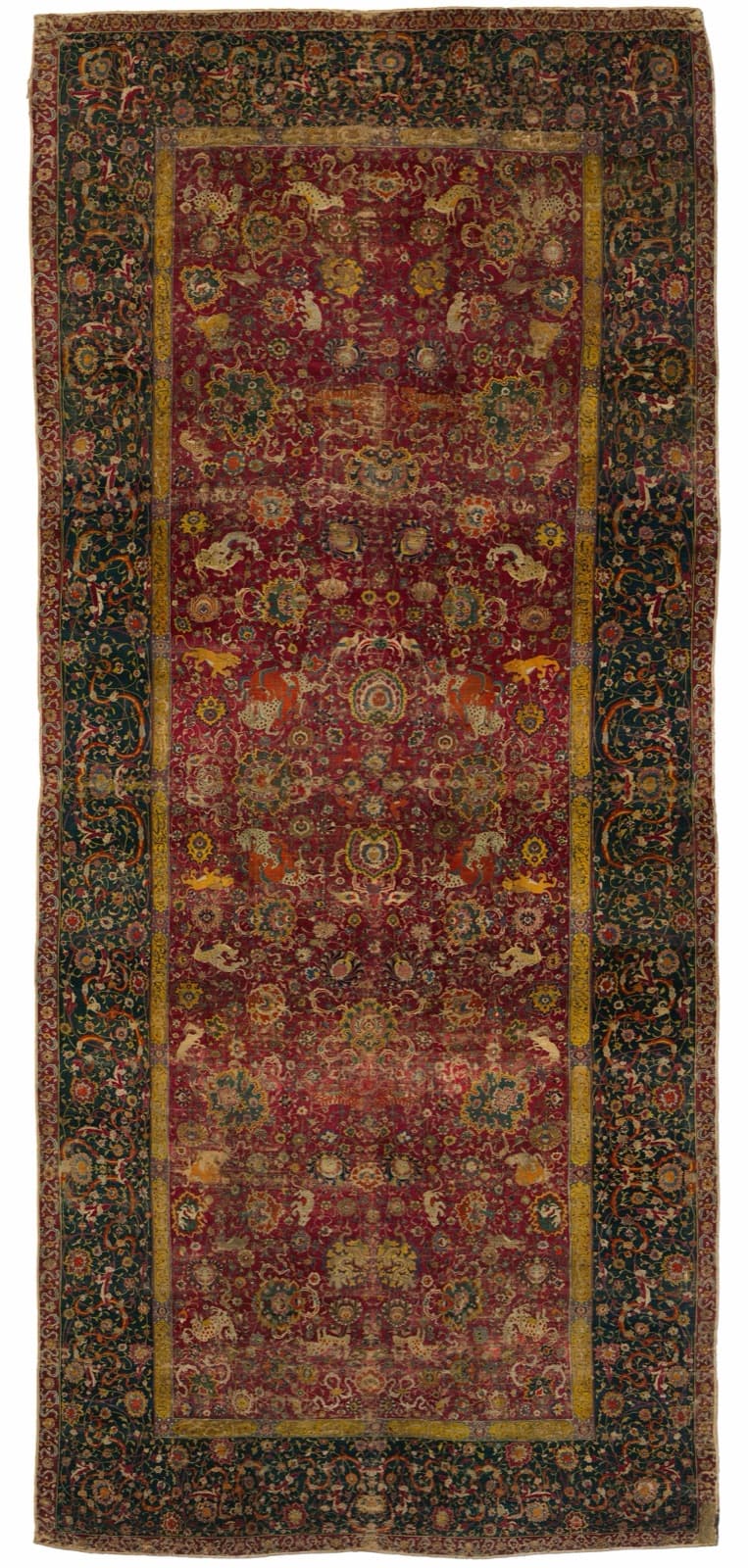
Look at the bands running across that weaving. The colour shifts, holds for a while, then shifts again.
That is abrash (the horizontal colour shift where one dye lot ended and the next began), and it is the reason this house is called what it is.
Why it happens
A weaver dyes wool in batches. A batch runs out. The next one is mixed from the same plant, by the same hands, to the same recipe — and comes out slightly different. Slightly more blue. Slightly less saturated.
The weaver keeps weaving. The join stays visible for as long as the carpet exists.
That is all abrash is: the place where one dye lot ended and the next began.
It happens horizontally because that is how a carpet is built — row by row, across the loom, from the bottom up. A band of colour marks a period of time. You are looking at the week the first batch ran out.
What it tells you
For most of the history of carpet weaving, abrash was simply what happened. Nobody chose it. It was the residue of working with plants, water and daylight instead of a formula.
Then carpets became an export industry, and it became possible to buy one without meeting the person who made it. Buyers needed to know what they were holding.
Abrash became one of the things they looked for.
Not because irregularity is beautiful in itself — but because it cannot be planned. A weaver cannot decide in advance where a dye lot will run out. It happens where it happens, once, in one carpet.
The part most brands leave out
Manufacturers of machine-made rugs now simulate abrash deliberately. Some of the larger ones spend real money on it, because the market has learned to read colour variation as a sign of quality.
We are not going to pretend otherwise, and the fact is more interesting than the myth.
A machine can copy a variation. What it cannot do is not repeat it. The simulated band falls in the same place on every rug in the run, because that is what machine production is for. The thing abrash actually proves is not irregularity.
It is unrepeatability.
One carpet, one dye lot, one week when the colour changed.
Why we took it as a name
We make printed garments. Digital reactive printing on cotton, in a factory, in quantities.
Every pair we make is identical. There is no abrash in our production and we are not going to claim there is — putting a fake dye-lot shift into a print file would be exactly the thing this page is about.
We took the name for what it stands for rather than what it does.
Abrash is the evidence that a person was there. It is the flaw that proves the hand, and it survived six hundred years of people trying to weave perfectly, because the imperfection turned out to be the point.
That is the standard we would like to be held to — in the patterns we licence and redraw, in what we say about where they come from, and in what we admit we do not know.
Worn closest. Seen least.